
Firearm Safety 101
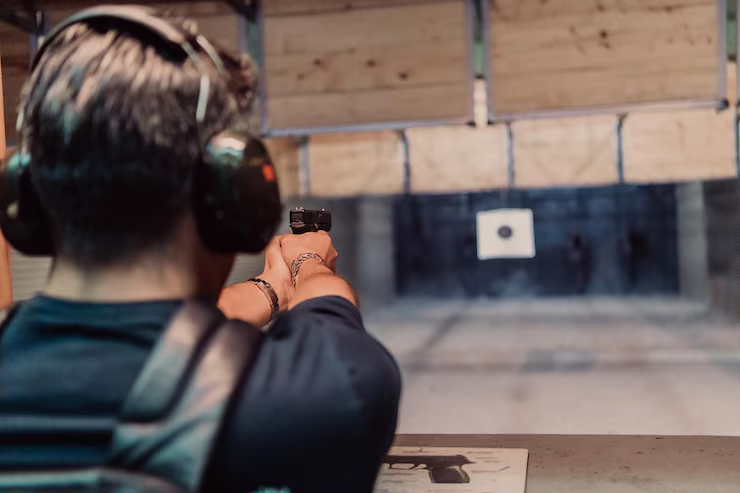
Clear, practical guidance every new firearm owner should know. This short guide focuses on safe handling, responsible storage, transport, and training. Apply it the moment you step into a range or bring a firearm into your home.
The Four Fundamental Rules
- Treat every firearm as if it is loaded. Never assume a gun is unloaded. Verify its condition yourself visually and physically before handling.
- Always keep the muzzle pointed in a safe direction. A safe direction means if the firearm were to discharge it would not cause injury or damage. At the range that means downrange; at home that means a wall or floor where no one is present.
- Keep your finger off the trigger until ready to fire. Rest your finger along the frame or receiver until you have aligned sights and decided to shoot.
- Be sure of your target and what's beyond it. Know what you are aiming at, what surrounds it, and what is past it. Bullets can travel long distances or pass through targets.
Safe Storage, protect people and property
Safe storage keeps firearms away from children, unauthorized users, and thieves. Follow these practical steps:
- Use a locked safe or approved gun cabinet for long-term storage.
- When appropriate, use a locking device (cable lock or trigger lock) as an additional barrier.
- Store ammunition separately from firearms in a locked container.
- Keep keys and combinations secure and known only to authorized adults.
Transporting firearms safely
Rules vary by location. Always check local and state laws, but these are widely recommended best practices:
- Unload firearms before transporting them.
- Keep firearms in a locked container or trunk when possible.
- Store ammo separately from the firearm while transporting.
- Know the rules for your state and any states you will travel through.
At the range: etiquette and safety checks
Ranges are training grounds, follow posted rules and common courtesies:
- Listen to range officers and follow instructions immediately.
- Wear eye and ear protection at all times while on the firing line.
- Only handle firearms at the firing line; when not shooting, keep actions open and magazines removed.
- Keep the muzzle pointed downrange and in a safe direction at all times.
- Communicate clearly with others; call out "ceasefire" and follow the range procedure if you see an unsafe act.
Training and continued practice
Safety is a skill that improves with training. Recommended next steps:
- Take a certified basic safety course from a recognized provider or your local range.
- Practice safe handling with unloaded firearms to build good habits.
- Seek one-on-one coaching for fundamentals like grip, stance, and trigger control.
- Keep medical and emergency contact info near your safe and in your phone.
Quick checklist (print or save)
- Always assume firearm is loaded, check it yourself.
- Muzzle discipline, always point it in a safe direction.
- Finger off the trigger until you intend to shoot.
- Store firearms locked and unloaded; store ammo separately.
- Transport unloaded and secured; follow local laws.
- Wear eye & ear protection at the range and follow range officer instructions.
- Take safety training and refresh regularly.
Adopting these habits helps reduce risk and keeps you and those around you safer.
← Back to Beginner's Corner